San Diego Louvered Pergolas ← Back to Home Get a Free Quote

San Diego County, CA · Coastal & Bluff Properties

Wind-Rated Louvered Pergola — San Diego

A wind-rated louvered pergola isn't a premium add-on near the coast — it's what the building code already requires, sized differently depending on how exposed the site is. La Jolla bluffs, Point Loma's ocean-facing side, and Coronado's open shoreline all carry higher design wind speeds than an inland Poway or Santee lot of the same footprint.

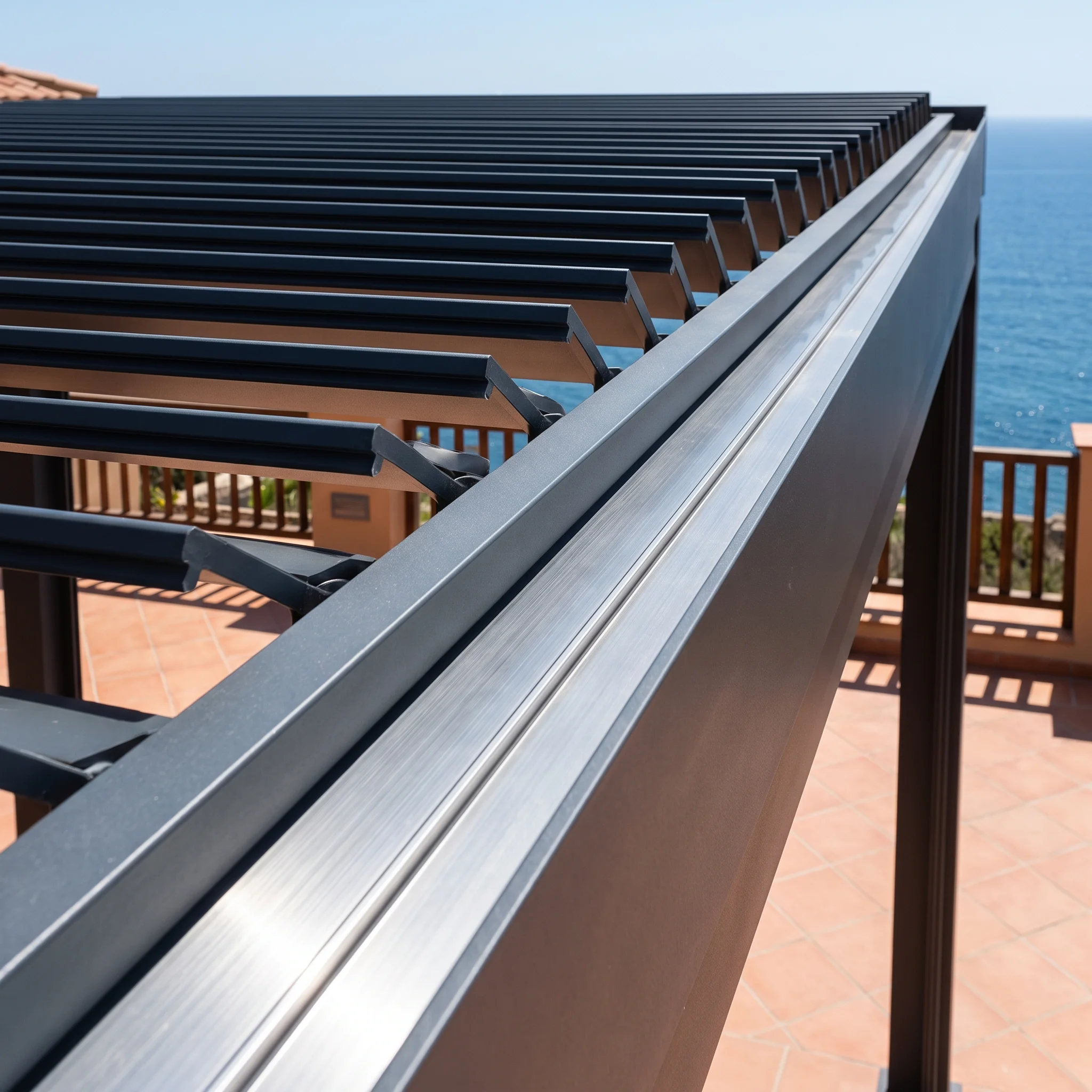
Close-up of a louvered pergola roof's aluminum blade hinge and motor mechanism, engineered for coastal wind exposure

Exposure Category

Open coastline and bluff-top sites sit in a higher wind-exposure category than sheltered inland lots.

Footing & Post Sizing

Higher design wind speed generally means deeper footings and heavier-gauge posts, engineered per site.

Wind-Sensing Louvers

Some motorized systems auto-close flat past a set wind speed to reduce sail area — confirm this on the spec sheet.

Wind-Rated Louvered Pergola: Where Design Wind Speed Comes From

The California Building Code references ASCE 7 wind-load provisions, which set a design wind speed and exposure category by location and how open the surrounding terrain is. A property with unobstructed ocean exposure or elevated bluff position is assigned a higher design load than a similar-sized lot several blocks inland or shielded by other structures. A structural engineer applies that number to size footings, posts, and connection hardware for your specific site — it isn't a single county-wide standard.

Wind-Rated Louvered Pergola: What This Adds to a Coastal Quote

Wind engineering is a separate line item from the salt-air material upgrades covered in our coastal materials guide — one is about corrosion resistance, the other is about structural load. Expect a stamped engineering calculation for an exposed site, which most jurisdictions require before permit issuance regardless of which contractor you choose. Ask any bidder for the exposure category and design wind speed they're engineering to in writing, not just a general "coastal-rated" claim.

What To Ask a Bidder

Request the design wind speed and exposure category in writing, and confirm whether the louver motor includes a wind sensor that closes the roof automatically. Get matched with a contractor who can answer this →

Wind-Rated Louvered Pergolas — Common Questions

Does a louvered pergola need a wind rating in San Diego?

Structural wind design is part of any building-permit submittal for a permanent patio structure, not an optional upgrade. What changes on an exposed bluff or immediate-coastline property is the wind speed the engineer designs to, which affects footing depth, post size, and attachment hardware.

Do louver blades open automatically in high wind?

Many motorized systems include a wind sensor that closes the louvers flat or triggers an alert past a set wind speed. Confirm this is included on the spec sheet — not every motor package has it by default.

Is a bluff-top or immediate-coastline property harder to engineer for?

Generally yes. Exposure category and design wind speed both increase closer to open water and with elevation under ASCE 7 wind-load provisions, typically meaning larger footings, heavier-gauge posts, or additional bracing than an inland structure of the same footprint.

Can an existing patio cover be retrofitted to a higher wind rating?

Sometimes, but it depends on the existing footings. If they weren't sized for the higher load, a retrofit often means replacing them, which shifts the scope from a repair to closer to a rebuild.

Related guides

Further reading